Strength After 40: Build the Body for Your Greatest Chapter
Muscle, metabolism, physical confidence and the lifelong pleasure of being a strong, capable man.
The Promise I Made to Myself
I was in my early twenties, stood 1.85 metres tall and weighed just 62 kilograms when a very simple moment changed the direction of my entire life.
I completed my honours degree at 24 years old and decided to take a year off after studies and work for Hannes Dreyer, the man who would later become my father-in-law and, over time, someone I came to regard as my father.
At an event he was hosting, he asked me to quickly move a large speaker.
There were quite a few people around, and I remember looking at this enormous thing, wondering how on earth I was going to lift it without making a complete fool of myself.
I was painfully self-conscious at that age. I was tall, exceptionally thin and had very little confidence in my physical strength.
Hannes was in a hurry. He noticed my hesitation, walked over and moved the speaker himself.
It probably took him a few seconds.
For me, the moment stayed.
You see, I was deeply in love with his daughter, who would later become my wife and the mother of my incredible son, Luke. And there I stood, watching the man whose respect meant so much to me move something I hadn't even had the confidence to attempt.
I felt an HUGE amount of shame.
Looking back, I understand that my reaction had very little to do with that speaker. I was confronting the fact that I had completely lost touch with my own physicality.
As a young boy in boarding school, I'd LOVED sport, I LOVED being physical. Rugby, cricket, tennis, just about anything that involved running around with the other boys.
But life became difficult. I was taken out of boarding school.
My biological father's alcoholism, my mother's deep depression and the instability that followed for many years meant moving between schools, towns and the homes of family who could take us in for a while.
I remember being the boy who arrived at yet another school wearing the uniform of 2 schools back.
Making friends became difficult when you weren't sure how long you'd be around. I didn't want to feel that loss again.
I learnt to live in my head.
I developed my mind and my inner world. I dreamt about the future and spent a great deal of time imagining what my life might become one day.
And somewhere through those difficult years, I forgot the boy who loved being physical.
My body had become little more than something attached to my big head, carrying it wherever it needed to go.
By the time I reached my twenties, I hardly knew what my body was capable of.
That Sunday evening after Hannes's event, I went home still thinking about what had happened.
And on Monday morning, as fate would have it, I opened Facebook. This was still in the early days of Facebook, when you could actually reach the end of your news feed! CAN YOU IMAGINE!
Right at the top was a quotation attributed to Socrates:
"It is a shame for a man to grow old without seeing the beauty and strength of which his body is capable."
I closed the app and just sat with those words. EINA OU.
I also wanted to know what my body was capable of. I wanted to feel strong, capable and confident in my physicality. And perhaps, more importantly, I wanted to rediscover a part of myself I'd lost along the way.
That Monday evening, before going to bed, I made myself a promise.
I was going to become a man I could look up to. And I was going to start by learning to appreciate my body.
So I started with ten push-ups every evening.
Ten.
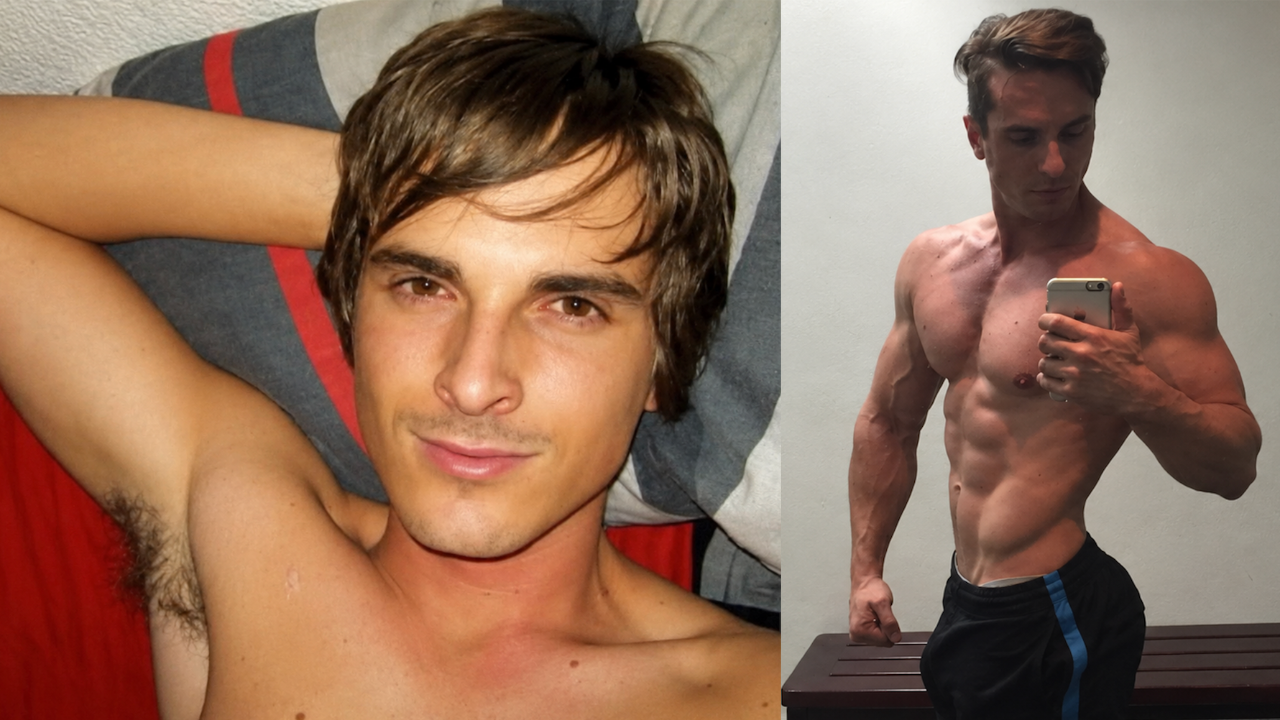
If you look at the before-and-after photograph I've included in this article, you'll understand why those ten push-ups were already a stretch for me at the time!
Eventually, ten became three sets of ten. I added three sets of twenty sit-ups. And with the little money I earned back then, I bought one of those pull-up bars you could hang in a doorway.
I started doing hangs.
Yes, hangs. You thought I was going to say pull-ups, didn't you? 🤣
Well, give a man some time!
Eventually, I became rather good at pull-ups by the way. My body became stronger, my confidence grew, and what started as a response to a very shame-filled moment developed into something I genuinely loved deeply.
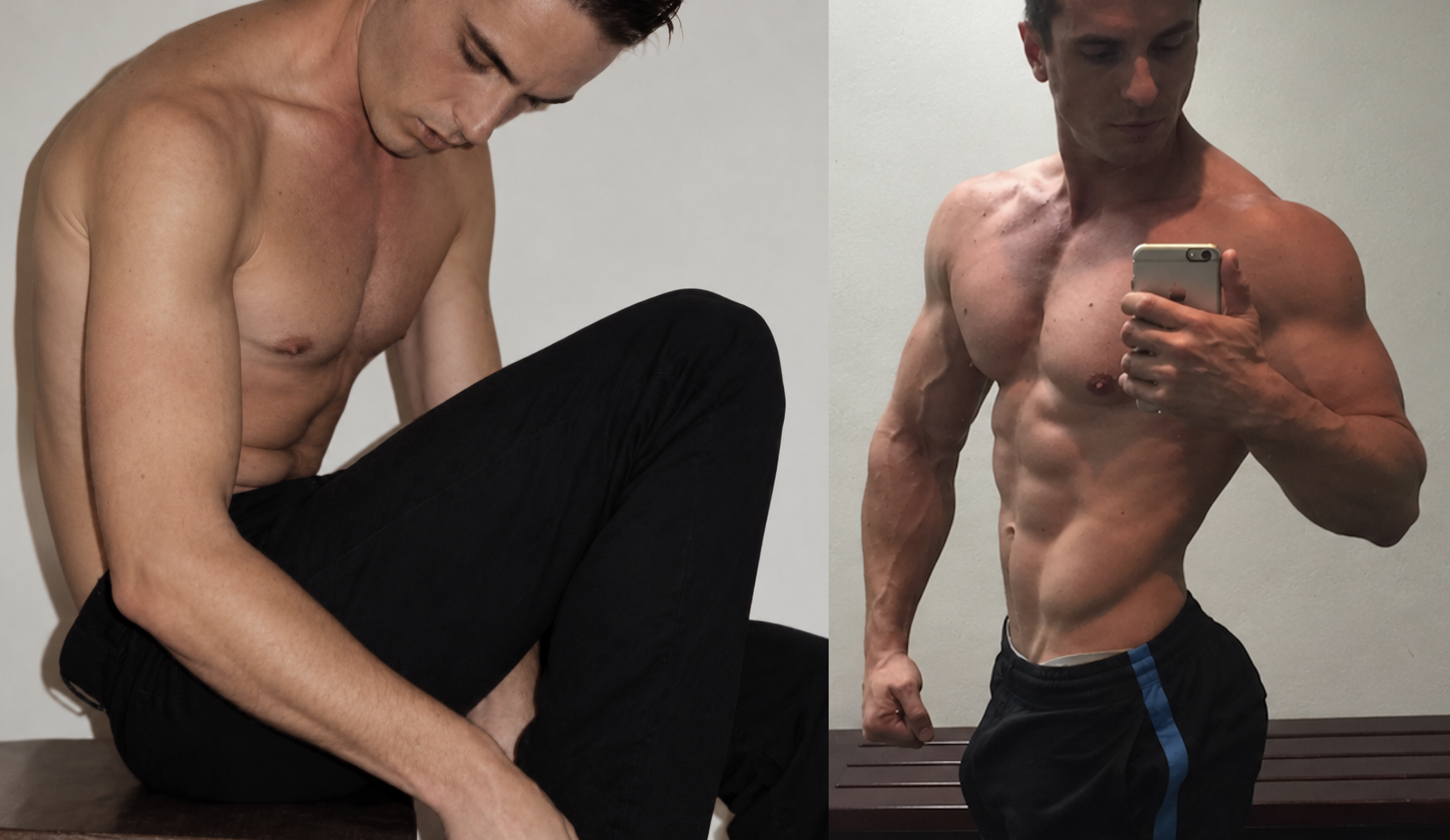
I rediscovered the part of the boy who once loved being physical. I fell in love again.
And from that first evening of push-ups, training and movement have remained part of my everyday life.
Today, at 41, I absolutely LOVE being a physically strong man.
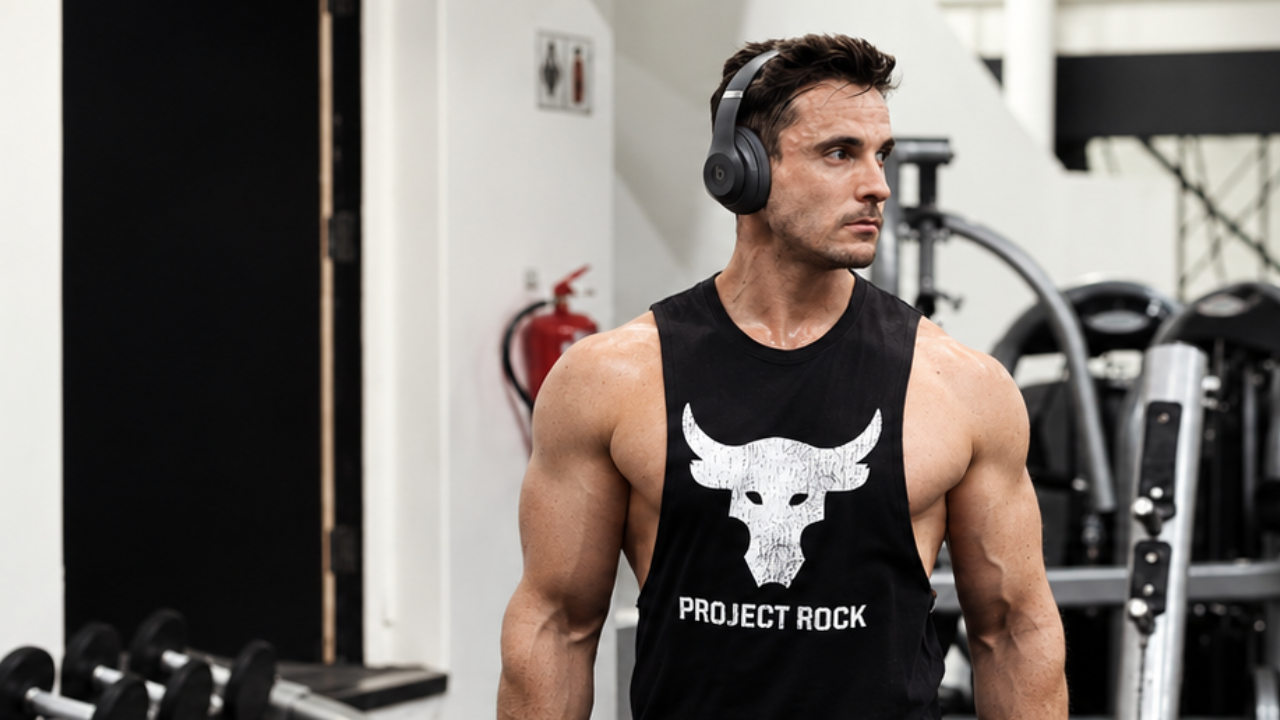
I enjoy lifting weights. I love feeling muscle on my frame, watching my body respond to training and experiencing the confidence that comes from knowing I'm physically capable.
And with maturity, my appreciation for my body has only deepened.
I've also become increasingly excited about the life ahead of me.
There are so many things I still want to build. Places I want to explore. People I love and want to be present for. Experiences I want to enjoy. And I have a much clearer understanding of the man I am and the man I want to further develop myself into.
I genuinely believe a man begins to know himself on a different level once he's been around the block a few times.
Through the experiences of life, our responsibilities, successes, failures, relationships and difficult decisions, we develop something incredibly valuable: REAL self-awareness.
We begin to understand what is really important to us, what we want to build and how we want to experience our very short lives here on this strange blue and green ball flying through space and time.
And at midlife, that clarity can become one of our greatest assets my dude!
I want my body to be capable of supporting every bit of life I get.
Looking back at that young man struggling to find the confidence to move a speaker, I feel an enormous amount of gratitude.
For the promise I made and 100% kept from that Monday evening and first 10 push-ups. For the strength I've developed. And for the privilege of spending the past just over sixteen years helping thousands of people discover what their own bodies are capable of.
That young man had no idea where ten push-ups would eventually take him.
And at 41, I'm still discovering where those 10 push-ups will take me. CAN YOU BELIEVE! 🤯
Let's talk about why.
THE STRONGEST CHAPTER OF YOUR LIFE SIR!
Midlife is a remarkable time to build
By our forties and fifties, many of us have lived through experiences that have shaped us irrevocably.
We've made decisions we're proud of and others we've had to learn from, sometimes humbled by falling flat on our noses after a lot of GROOT MAN EGO.
We can become more deliberate about our ambitions and align our direction with our true values. Our own north star, gentlemen.
Some men are expanding businesses or stepping into leadership. Some are raising children. Others are finding new relationships, exploring interests they've neglected or building a life that feels more aligned with who they've become. And some are doing all the above.
Physical strength helps us participate more fully in all of it.
And yes, I appreciate how it feels to look great, too. 😉 I'll come back to that.
Empires are built here. And we need the muscle my dude!
I love this thought because it captures how I feel about being a man in midlife.
An empire can be a business, a family, a body of meaningful work, a home, a legacy of service, or simply a life you've built with intention and love.
Whatever yours looks like, it takes energy, resilience, focus and the willingness to show up consistently.
We carry responsibilities. We make daily choices about where our time and attention go. And we deserve the capacity to enjoy the lives we're working so hard to build, for as long as God's grace allows.
That's why we need the muscle. And the habits that support our health, energy and longevity.
It's one of the reasons I make training part of my life. The gym is where I invest in my physical future, challenge myself and enjoy the process of becoming stronger.
Because the real reward reaches far beyond the gym.
I want to be strong enough to build the life I want, and healthy enough to enjoy the life I've built.
MUSCLE IS AN INVESTMENT IN YOUR FUTURE
What happens to muscle as men age?
Muscle mass, strength and power change throughout adult life.
On average, adults begin to lose some muscle mass as they get older, although the timing and rate differ considerably between people. Strength and muscle power can change as well, and those changes can become more pronounced in later life.
The US National Institute on Aging explains how the age-related loss of muscle and strength contributes to reduced mobility and physical independence. Severe age-related loss of muscle strength and function is associated with sarcopenia.
Those developments have practical consequences most of us have already seen in our grandparents and in some cases our own parents.
Strong muscles help us climb stairs, get up from a chair, carry things, move confidently and recover from demanding physical activities.
And this is the great part: we can continue building strength through resistance training well beyond forty.
Age influences how we adapt and recover, but it does not close the door on progress. Research in older adults consistently shows that appropriately designed strength training can improve muscular strength and physical function.
Our training may need to become more individualised as our bodies, experience and circumstances change, of course.
Muscle is active tissue that supports metabolic health
When men hear the word metabolism, the conversation often goes straight to body fat.
Muscle has a more interesting role in our health than simply increasing the number of calories we burn. Or our willingness to take off our shirt at a public pool.
Skeletal muscle helps us move and is a major site where the body takes up and uses glucose. During and after physical activity, muscles become important participants in how the body handles overall energy.
A 2025 review of muscle glucose uptake describes skeletal muscle's central role in glucose storage and use, including its response to insulin and muscle contractions.
Maintaining muscle and staying active can therefore support metabolic health and help us manage our bodies more effectively for as long as we can.
Body composition depends on many factors, including total activity, food intake, sleep and long-term habits.
I want men to understand the genuine value of muscle.
We're building tissue that contributes to movement, strength, glucose regulation and physical resilience.
That's an excellent reason to train.
Strength, bones, balance and independence
Muscles work with bones, tendons and joints to help us move. Resistance training can support bone and muscle health, while other forms of movement develop cardiovascular fitness, balance and coordination.
These become increasingly important as we age.
The World Health Organization's physical activity guidelines recommend muscle-strengthening activities involving all major muscle groups on at least two days a week. For adults aged 65 and older, the guidelines also emphasise balance and functional training as part of reducing falls and supporting physical ability.
I think about what this means in everyday life.
Being able to get down onto the floor with your children or grandchildren, then stand up comfortably. Hiking a trail with people you love. Carrying bags, travelling, cycling, working in the garden or enjoying a physically demanding hobby.
These are ordinary pleasures that can become deeply meaningful as we get older.
BUILD A BODY THAT SERVES YOUR LIFE
Resistance training belongs in your week sir
If there's one practical habit I would encourage men to develop, it's regular resistance training.
You can train in a gym with free weights and machines, at home with resistance bands and bodyweight movements, or through an appropriate combination. We have seen incredible transformation with all the above.
The essential principle is giving your muscles a challenge they can adapt to, then progressing that challenge over time.
The American College of Sports Medicine's 2026 position stand reviews resistance training for strength, muscle growth and physical performance. Its practical message is simple: individualised, sustainable programmes and consistency in your training are key to progress.
For a man returning to exercise, two or three well-planned sessions a week can be a GREAT starting point.
A straightforward full-body programme might include:
Knee-dominant movement suited to your ability. Hip hinge movement, again... suited to your ability. A pushing movement for the chest, shoulders and arms. A pulling movement for the back and arms. Some work for your trunk, balance and carrying strength. A beginner could start with one or two manageable sets per exercise, learn good technique and build towards more demanding work as confidence and capacity improve.
The precise exercises and loads should reflect your health, experience and goals.
Train to become stronger
I love progressive strength training because it's such a clear example of what consistency can achieve.
You start with a level of work you can perform well. Over time, you improve your technique, add repetitions, increase resistance where appropriate or perform more total work.
You're giving your body a reason to adapt.
For many men, sets of roughly six to twelve controlled repetitions are a practical way to begin building strength and muscle, although effective training can use a wider range of repetitions and loads.
You also need to train with enough effort to challenge the muscles. That doesn't mean every set has to end in complete exhaustion. The latest research shows that strategically holding reps in reserve has the same progressive strength results but with less recovery time.
The 2026 ACSM evidence review notes that methods such as always training to momentary muscle failure, using one particular type of equipment or following complicated periodisation are not essential for the average healthy adult to make progress.
As your experience grows, training can become more specific to your goals. If building substantial muscle is important to you, the amount of challenging work each muscle receives is also something you need to take seriously.
The fundamentals are wonderfully dependable.
Train consistently. Challenge yourself. Develop good technique. Recover. Repeat.
There is SO MUCH satisfaction in watching what your body learns to do over months and years.
Cardio? Sure... I sometimes do bicep curls fast 🤣
Don't neglect it sir. Cardio makes a strong body more capable
I enjoy lifting weights, but I also want a heart and lungs that can support the way I live.
Cardiovascular fitness allows us to walk, cycle, climb, travel and pursue active experiences with greater ease. It supports overall health alongside strength training.
The WHO recommends 150–300 minutes of moderate-intensity aerobic activity each week for adults, or 75–150 minutes of vigorous activity, or an appropriate combination.
That can come from brisk walking, cycling, swimming or other activities you enjoy.
You can begin at a manageable level and build gradually like I did with my push-ups when I just got started.
There is value in doing something, even if your current circumstances don't allow you to reach those targets immediately. Go for a 5-minute walk if that is all you can do today.
A body that is both strong and aerobically fit gives us a broader range of physical capabilities to enjoy.
Eat to support the man you're becoming
Training is the stimulus. Nutrition gives your body the resources to adapt.
For men building or maintaining muscle, adequate protein is particularly important.
Individual needs vary with age, body size, training, energy intake and medical circumstances.
I encourage a practical approach: include quality protein sources in meals, eat enough to support your activity, and build your nutrition around foods you enjoy and can sustain.
If your goal includes losing body fat, a well-planned good old calorie deficit and resistance training can help you improve body composition while working to preserve muscle.
More aggressive dieting can be incredibly effective sprints for accelerating the fat loss process if that is your goal but is best done with the proper support.
Food should support your health, your training and your life.
Recovery is part of the work
A mature approach to training includes knowing when to push and when to recover.
Our muscles adapt to challenging training when the body has adequate time, energy and nutrition to recover. Sleep, sensible programming and managing fatigue are part of that process.
Men should train with commitment and intelligence.
Progress sometimes requires patience. A temporary injury may mean changing up exercises. A demanding season at work may mean reducing training volume for a few weeks. A man returning after years away from the gym may need to build his capacity gradually.
The objective is to establish a relationship with training that can continue serving you for years.
I believe consistency becomes much easier when we see it as an investment we value, rather than another demand we place on ourselves.
THE PLEASURE OF BEING STRONG
Enjoy the body you've built
I'd like to say something about the pleasure of looking great and physically strong.
I like it. A lot. I enjoy seeing muscle develop, feeling athletic and how clothes fit. There is satisfaction in developing your physique, and I think men should be comfortable acknowledging it.
I also appreciate that bodies differ. Not every man has the same starting point, goals or physical capacity. Some men want more muscle. Some want to move without pain, regain fitness after illness or feel stronger in everyday life.
The key is developing an honest, respectful relationship with your own body and recognising the progress available to you.
You can enjoy how you look, appreciate what your body can do and keep caring for it as the years pass.
Your next chapter deserves preparation
You don't have to transform everything at once. You can start with two sessions a week (or even 10 push-ups), improve your nutrition, walk more regularly and build from there. If you're already training, you can set more ambitious physical goals and enjoy pursuing them.
At 41, I'm excited about my future.
I want to keep building, exploring, loving, contributing and enjoying the life God has given me. And I want my body to remain a strong partner in that journey.
That's why I train. That's why I take my health seriously. And that's why, after more than sixteen years in physical transformation, I still find this work so, so meaningful.
I believe my greatest chapter is still ahead of me. And I'm building a body strong enough to enjoy every bit of it.
Your brother and friend,
Jacque Visagie
Health disclosure: This article is educational and reflects my experience as a holistic transformation coach. It is not individual medical or exercise advice at all. Training, nutrition and recovery should be adapted to your health and circumstances; seek appropriate professional guidance when managing illness, injury or other medical concerns.
Explore A Few Articles
My thoughts on identity, pressure, relationships and building a life from your values.