Raising a Boy Without Breaking His Spirit
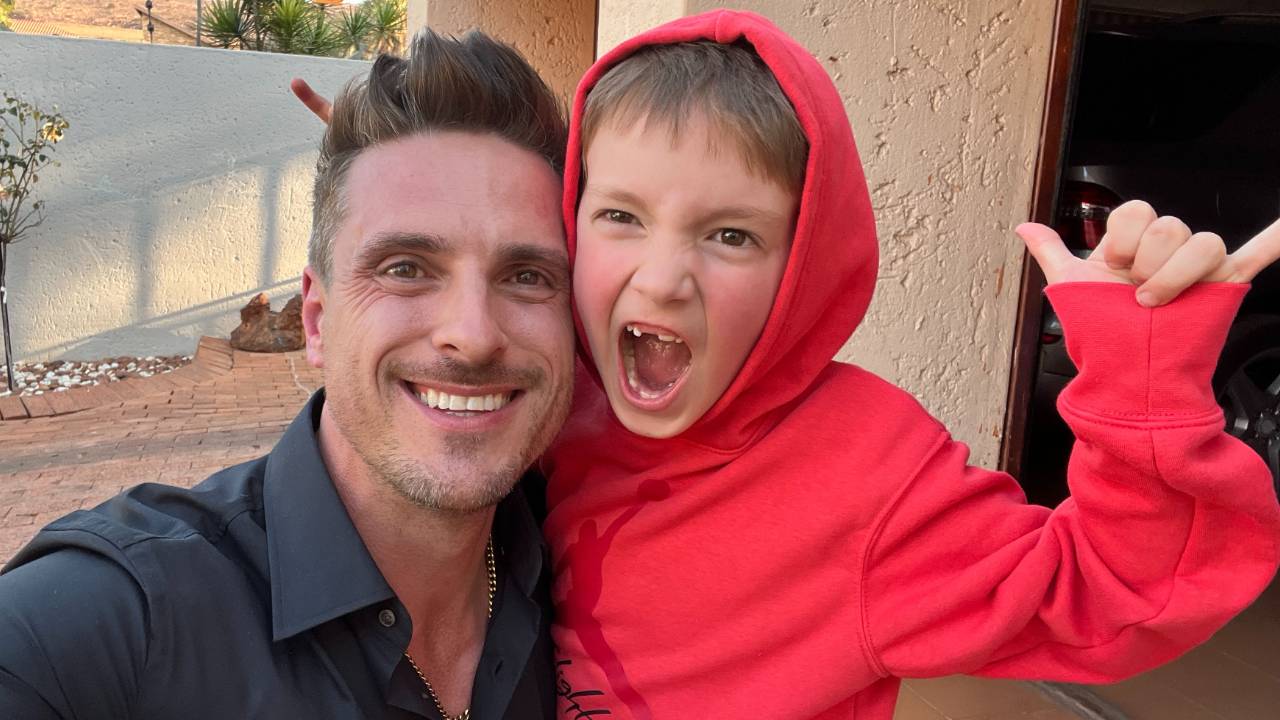
I want to get to know and understand the boy before trying to raise the man.
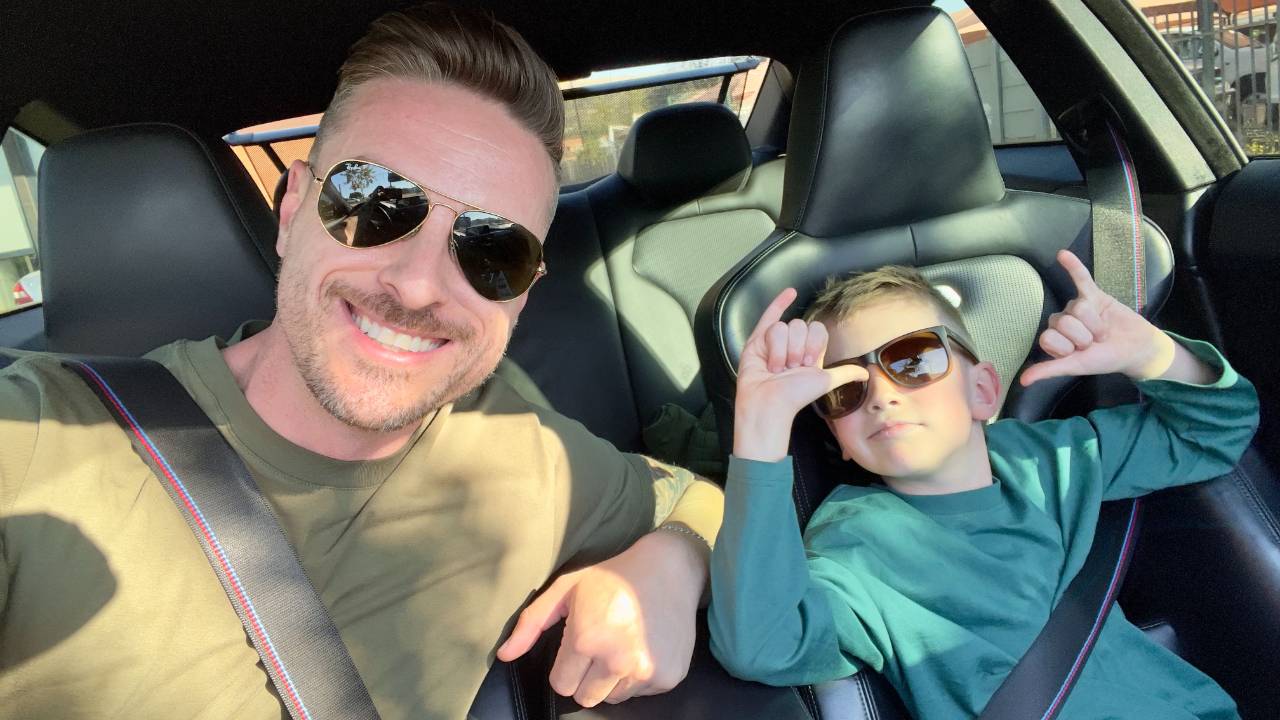
My son Luke is eight years old.
He is at an age where the world is still full of extraordinary possibilities, very complicated questions, imaginary adventures in our back yard, and things that absolutely MUST be shown to Dad IMMEDIATELY.
And, of course, monsters, dragons, zombies and also some very real fears that I do my best to explain and set his mind at ease.
Like the thought of someone taking him away from Mom and Dad. Or what happens if one of us dies someday. Or both of us?
Those are VERY BIG questions for a little boy who is only beginning to understand the world, how much he really depends on us, and that some things in life are in fact beyond our control.
Sometimes he needs an explanation. Sometimes reassurance. And sometimes, I think, he simply needs to know that Mom and Dad are close by.
I find this stage of his life absolutely fascinating and a privilege to witness. I thank GOD every day for trusting me to be this boy's dad.
I remember reading an article saying that one of a father's greatest responsibilities is to raise his son to become independent enough that he no longer needs his dad.
To prepare him to stand on his own two feet.
I understand that completely. In fact, I fully agree with the ambition.
But I've been thinking about what that really means.
Surely the goal isn't just to make our children need us as little as possible as quickly as possible. It's to give them what they need, at each stage of their lives, to become increasingly capable of navigating the world themselves.
And perhaps it's important to acknowledge the difference between raising a son who no longer needs his father to make his decisions and raising a son who no longer feels he can turn to his father.
I want Luke to become independent. I want him to develop confidence, courage, good judgement and the ability to take responsibility for his own life.
But I also want him to know that growing up doesn't mean he has to face everything alone.
That brings me to something I've become increasingly aware of as a dad. Luke is growing up fast.
I'm raising a boy who will one day become a man. And I have to prepare him.
But first, I have the extraordinary privilege of getting to know the boy.
And I don't want to miss that.
I Coach Men. But I Get to Raise a Boy. WOW! 🤯
I've spent years coaching men through some of the more complicated questions of adulthood.
Who am I, really? Why do I keep repeating certain behaviours? Why does success sometimes leave me feeling so unfulfilled? How did I become so disconnected from myself? What kind of life do I actually want?
These are important conversations I have with men daily.
More often than not, they involve examining beliefs and behaviours passed down by their own fathers. Sometimes ddeliberately, sometimes without even realising it, and often with the very best of intentions.
These patterns can take root in childhood, long before a boy has the maturity, awareness or language to understand what he's actually absorbing and how it is shaping him.
And then I think about Luke.
Here's this remarkable little human being, still discovering who he is, while I'm having the extraordinary privilege of being his dad.
I'm not only raising the boy Luke is today. I'm helping shape the man he will become. And the influence he will eventually have. That is LEGACY.
Every conversation, every lesson, every example I set, and every belief I pass on, intentionally or unintentionally, has the potential to influence how he sees himself, how he sees the world, how he sees and experiences God, how he treats others, what he believes he's capable of, and ultimately, the kind of life he builds and what he passes on to his children one day.
He's learning from what I teach him. But he's also learning from who I am when I'm not trying to teach him anything at all.
WOW. That's quite a responsibility I admit. And also an extraordinary privilege.
As a coach, I spend so much time helping grown men develop self-awareness, understand their emotions, question limiting beliefs and learn to trust their own judgement.
As Luke's dad, I have the privilege of nurturing those very abilities while he's growing up.
Helping him recognise his feelings, discover his strengths, understand his choices, develop confidence and gradually learn to trust himself.
I take that very seriously.
But there's something else I need to remain conscious of.
Luke doesn't need me to be his high-performance coach. He needs me to be his dad.
He needs encouragement and guidance, absolutely.
But he also needs play, affection, laughter, ordinary afternoons and a father who's genuinely interested in his world.
Sometimes the most meaningful thing I can do is put down whatever I'm busy with and enter that world with him.
I try to never speak down to him and always on his level. To involve his opinions and thought about things and offer perspective.
Because before I can teach him how to become a good man, I have the privilege of loving him exactly as the little boy he is.
I deeply believe God knows Luke best and has a plan for his life. My job is to facilitate that which God placed in this boys heart already.
God trusted me with this remarkable boy for a reason. I know I am only Lukes "earth dad" and God is his Heavenly Father.
A Boy Needs Different Things at Different Ages
I've recently reread a phenomenal book on raising boys Wild Things: The Art of Nurturing Boys, by Stephen James and David Thomas.
What particularly interested me was their framework for understanding five broad stages in a boy's development. And I could clearly see the resemblance in my sons life to date.
The authors call them the Explorer, Lover, Individual, Wanderer and Warrior.
They approach boyhood through three lenses: the way of a boy, the mind of a boy and the heart of a boy.
They also clearly say that these stages aren't strict age milestones. In the publisher's excerpt, the authors describe their framework as a combination of developmental theories and observations, with flexible age ranges.
A boy of four, a boy of eight and a young man of eighteen are developing different capabilities, relationships and ways of understanding themselves.
And the adults raising them need to adapt as well.
The Explorer: Ages 2–4
At this stage, James and Thomas emphasise curiosity, movement, imagination and a growing desire for independence.
Everything is worth investigating.
Including things that probably shouldn't be investigated with a screwdriver. 🤣 Yes I have some experience with this.
Young children are discovering what their bodies can do, how their environment works and where the boundaries are.
Those boundaries are important.
But expecting a small child to demonstrate the impulse control of an adult is unreasonable.
What they need is patient supervision, opportunities to play, safe exploration and consistent limits.
The objective is to help them gradually develop self-regulation, not demand that they already possess it.
A child testing a boundary is not necessarily challenging your authority. He may be learning where the boundary is.
The Lover: Ages 5–8
This is where Luke is now. At least at the end of this phase and already showing a lot of signs of the next stage.
The authors describe a stage in which affection, relationships, belonging and encouragement are especially important.
Boys are developing friendships, learning more about fairness, becoming increasingly aware of other people's feelings and discovering where they feel capable.
It's an amazing age and one I will very much miss!
Their world is expanding, yet the security of their relationship with their parents remains enormously important.
A boy can want greater independence and still need to crawl into his dad's arms.
He can be adventurous and frightened.
Confident one afternoon and very uncertain the next.
And that's perfectly normal.
I find myself paying more attention to how Luke experiences things, rather than simply what he's "getting right".
Does he enjoy something because it genuinely interests him, or because he thinks it will please me?
When he struggles, does he feel comfortable asking for help? And I try to give him space to make that call.
When he succeeds, can he enjoy his accomplishment without needing someone else to witness his success?
Nothing wrong with sharing a victory. But intrinsic motivation is also super important to cultivate in a child.
There's a tremendous opportunity at this age to develop confidence, emotional understanding, curiosity and healthy relationships.
And I love that much of it happens through play.
The Individual: Ages 9–12
Any day now Luke will be entering a stage where his identity, independence and social world become increasingly important. To a degree some of it already started.
The authors describe boys beginning to establish a stronger sense of individuality in this stage.
Friendships and peer acceptance starst becoming increasingly important. Interests become more defined. Their understanding of themselves becomes increasingly complex.
A boy may begin challenging opinions he's previously accepted without question.
This means he's beginning to think for himself. That is something we want to deeply support and facilitate correctly because that is what we ultimately want?
A young person capable of considering information, developing opinions, recognising his strengths and making thoughtful decisions.
Of course, that means allowing him opportunities to also sometimes disagree.
Within appropriate boundaries of course, he needs room to develop his own judgement. And the space to sometimes burn his own fingers safely.
My job isn't to do all his thinking for him. It's to help him become someone who can think well for himself.
That will require some restraint on my part.
I'm sure I'll manage. Mostly. 🤣
The Wanderer: Ages 13–17
Adolescence. I won't lie... this one scares me and I read a lot of books!
I imagine I'll have a few things to learn here.
James and Thomas describe this as a period of significant physical, emotional and social change, alongside the growing desire for autonomy.
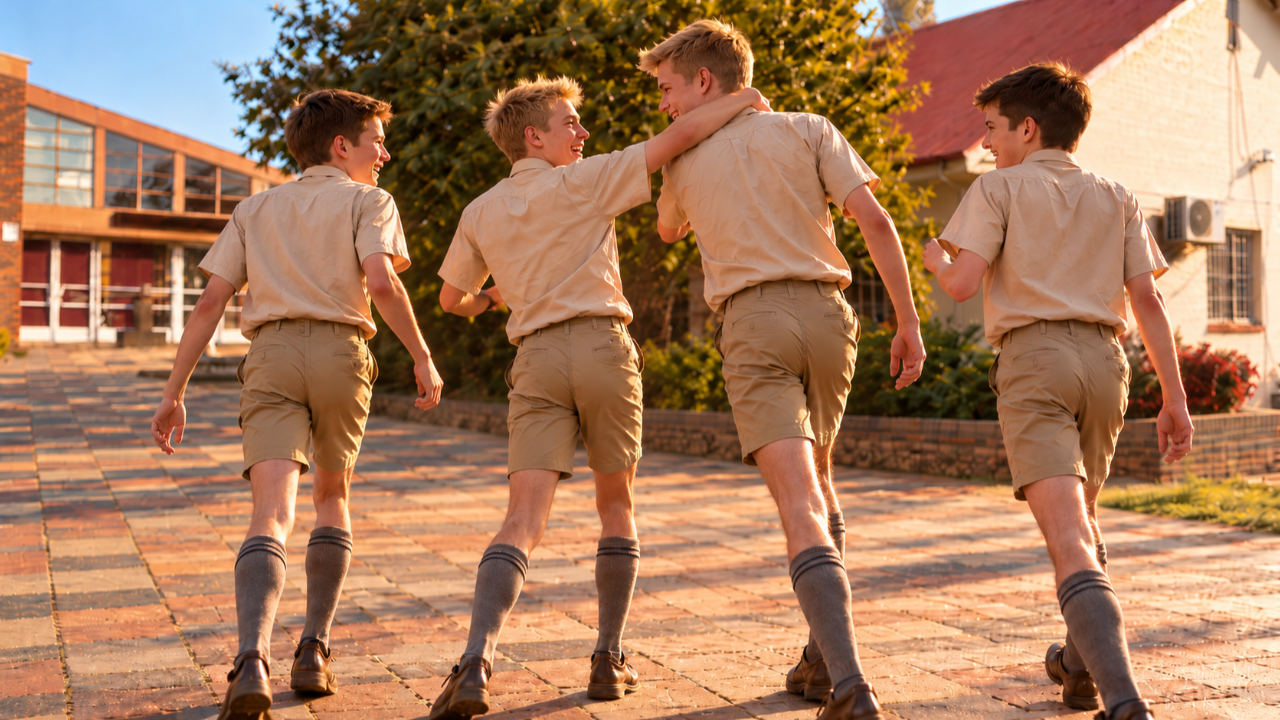
I can still remember back when I was in that stage, all I can say is thank you for the fact that there weren't cameras everywhere back then. I wrote about my boarding school days - Ná ons mekaar gemoer het, was ons broers.
Teenagers are developing their identities, testing ideas, forming increasingly important friendships and preparing for greater independence.
They're also navigating a world in which their peers, social media and other influences can carry enormous weight. And not always in a positive way.
At this stage, parenting cannot rely entirely on instruction and supervision.
There has to be a relationship strong enough to survive disagreement.
I want Luke to feel comfortable challenging my thinking.
I also want him to understand that independence comes with great responsibility Parker.
There will still be boundaries, expectations and consequences.
But I hope that by then, he'll have experienced enough honest conversations with me to know that disagreement doesn't threaten our relationship.
I don't need him to agree with everything I believe.
I want him to develop the ability to examine what he believes, understand why it is really important to him and live responsibly from those convictions.
The Warrior: Ages 18–22
The authors use the term Warrior for the transition into young adulthood.
I interpret that less as conquering the world and more as developing the capability and courage to take responsibility for your own life.
A young man begins making decisions with increasingly significant consequences.
Education. Work. Relationships. Money. Health. Purpose.
And, hopefully, a growing understanding that freedom and responsibility belong together.
By this point, I hope Luke won't need me to make his decisions.
But I also hope he'll still want to talk to me about them.
There's something beautiful about the idea that fatherhood gradually changes from directing a child's life towards supporting an adult who is capable of directing his own.
One day I'll have to give him the freedom to build a life that looks different from mine.
And if we've built a strong enough relationship along the way, I pray I'll have the privilege of being a big part of that life.
Don't Raise a Theory. Get to Know Your Boy. They are all different.
Developmental frameworks can help us understand our children, sure. They must never become boxes we force our boys into.
Some boys are adventurous and physically expressive.
Others are thoughtful, sensitive and happiest absorbed in a book, a creative project or their own imagination.
Like Luke, plenty are both.
And their personalities, interests and developmental needs can change significantly as they grow.
We should be careful about telling boys what they are supposed to enjoy, how they should express themselves or which emotions are acceptable because they're male.
This could in itself cause them to feel that there is something wrong with them.
Psychologist Janet Shibley Hyde's review of research on psychological differences between boys and girls reminds us that the sexes are similar on most, though not all, psychological characteristics studied. Broad averages cannot tell us who an individual child is.
I want Luke to enjoy being the boy he is.
I also want him to feel free to discover what being Luke looks like.
That requires curiosity from me.
Sometimes, as parents, we can become so invested in what we believe is best for our children that we stop noticing what they're trying to tell us.
And this is where self-awareness becomes particularly important.
Am I responding to my child's actual needs?
Or am I responding to an expectation I've inherited, a fear I carry in me, or an experience from my own childhood?
That's a question worth asking.
I've written about examining inherited expectations and accepting yourself as a man. As a father, I want to do that work rather than unconsciously hand every expectation down to my son.
There Is More Than One Way to Raise a Good Man
There's a few conversation about parenting that often creates some... well... passionate feedback.
We often confuse strict parenting with effective parenting.
At the other extreme, we can confuse being loving with allowing children to do whatever they want.
Neither approach captures the full responsibility of raising a child.
Psychologist Diana Baumrind's influential work on parenting styles offers a useful distinction, explained in the American Psychological Association's overview.
Authoritative parenting combines warmth, responsiveness and meaningful boundaries.
Authoritarian parenting places much greater emphasis on obedience and control, often with less emotional responsiveness.
Permissive parenting offers warmth but relatively few firm expectations.
Uninvolved parenting provides little of either.
These are just some broad descriptions but I think it is still useful.
A boy needs enough security to feel loved and enough structure to learn responsibility.
He also needs room to practise independence.
That balance changes with age, temperament and circumstance.
A child who is struggling emotionally may need a different approach from one who is simply testing a familiar rule.
And what works beautifully for one boy may not work for another.
The American Academy of Pediatrics' guidance on effective discipline also makes an important point: discipline should teach healthy behaviour, not rely on physical punishment, shaming or humiliation.
I want to approach fatherhood with high standards and a willingness to keep learning.
Firm without being intimidating.
Affectionate without making every difficult experience disappear.
Supportive without taking over.
And humble enough to recognise when what I'm doing simply isn't working.
I am the adult. I try to never enter disciplinary moments in a heightened emotional state.
He Has a Whole Family Helping Him Grow
Another thing I appreciate about Wild Things is its recognition that raising boys involves far more than just a father alone.
Mothers, grandparents, educators, mentors, extended family and other trusted adults can all contribute in incredible valuable ways. Luke is blessed to have close family that loves him and whos intentions are pure towards him . I'm so grateful for that.
I want Luke to have strong relationships with people who care about him and bring different strengths, experiences and perspectives into his life.
His mother has an extraordinary role in that journey.
So do the grandparents and other people who love him.
Our family circumstances may have changed, but our responsibility to nurture him stays at the forefront.
And there is no single family arrangement that absolurtely guarantees a good outcome.
Children grow up in all kinds of families: with parents together, with parents apart, with one parent, with two mothers or two fathers, and with grandparents or other caregivers.
What is important is the quality of their care, the stability they experience, the safety of their relationships and the opportunities they have to develop.
I also want Luke to have other good men in his life.
Men who are dependable, emotionally mature, generous and comfortable in their own skin.
Different personalities. Different abilities. Different ways of building meaningful lives.
Because there are many wonderful ways to be a man.
Being Honest About Who I Am Is Part of Our Family Life
Luke knows that I'm gay.
I've already written more personally about why I chose to speak honestly with him, rather than leaving that conversation for some distant future.
What interests me particularly as he grows is how those conversations will evolve alongside his understanding of the world.
At eight, his questions and frame of reference are different from what they'll be at twelve or sixteen. So will his feeling.
So I don't approach this as one enormous conversation that needs to be completed.
It's part of our ongoing relationship.
We talk in ways appropriate to his age and understanding.
I answer questions honestly, without introducing adult details that aren't relevant to him.
And I want him to know he can revisit a question as often as he needs to.
The American Academy of Child and Adolescent Psychiatry's guidance for LGBTQ parents encourages open, age-appropriate conversation and helping children navigate questions or comments about their families.
Importantly, Luke doesn't carry any responsibility to explain, defend or emotionally manage his dad.
That's my responsibility.
He's free to love his mother and father, enjoy his childhood and make sense of the world at his own pace.
And I want him to understand that the people we encounter will have different families, beliefs and experiences. We can meet those differences with curiosity, dignity and grace.
There is a great deal about life he'll only understand as he gets older and as get get's mor living experience.
That's perfectly fine.
God willing, we have time.
Raising a Boy Who Can Eventually Lead Himself
Here's where my experience coaching men has given me something so valuable.
Self-awareness is not simply knowing what you're good at.
It's recognising what you're feeling and why.
Understanding your behaviour.
Being able to examine your assumptions.
Recognising the difference between what you genuinely value and what you're doing to win someone else's approval. BIG ONE.
Knowing when to seek guidance and when to trust your developing judgement.
These are capabilities that grow over time.
And as a father, I can help Luke practise them in ways appropriate to his age.
Sometimes by asking a thoughtful question.
Sometimes by giving him a responsibility and allowing him to learn and yes... get it wrong.
Sometimes by helping him make sense of a disappointment.
And sometimes by noticing that what he needs is reassurance, a laugh, or a bit of space.
I don't want every moment of his childhood to become a lesson.
Genade nee. That would be exhausting for both of us.
I want to help create an environment where learning about himself becomes a natural part of growing up.
Where he can make mistakes and take responsibility for them.
Where he can enjoy his achievements without building his entire sense of worth around there outcome.
Where he can be curious, courageous, affectionate and fully himself.
And where he develops the confidence to keep growing long after he's no longer living under my roof.
When Luke Is Thirty
There's a question I saw asked on social media.
When Luke is thirty years old, what do I hope he'll say about the father I was to him?
Sitting with that question I realised it's a tough on.
Because there is SO SO SO much I want to give him. So much I want him to understand about life, love, faith, responsibility, courage and what it means to live well.
And perhaps that's part of the challenge of being a dad.
You have this extraordinary little person in your care, and you want to prepare him for a world you know can be both breathtakingly beautiful and terribly scary and difficult.
You want to give him everything he'll ever need.
But you can't.
You cannot live his life for him. You cannot protect him from every disappointment, make every decision or guarantee that the world will always be kind. It won't.
And I wouldn't want to rob him of the experiences through which he'll discover his own strength, judgement and capacity to grow as a capable man.
So I've been thinking less about everything I want to teach him and more about what I hope he'll remember of me.
I hope he'll remember a dad who loved God and trusted Him. Not a man who always had everything figured out, but one whose faith was part of how he lived, loved and navigated life's uncertainties.
I hope he'll remember a dad who was quick to love and forgive, and slow to judge. A man who could acknowledge his own mistakes, extend grace to others and recognise that none of us has this whole business of being human completely figured out.
And I hope he'll remember that he could always come to me.
Whether he had something wonderful to celebrate, something difficult to confess, or simply needed someone to listen, or he just wanted to be with his dad for a moment.
That I encouraged him follow his heart and to give things his best, to have the courage to try, to fail without losing faith in himself, and to get up and try again.
The quality of our lives is shaped by so much more than the things we accomplish. It's shaped by who we become and how we show up along the way.
And there's one more thing.
I hope that at thirty, Luke will be building a life he's genuinely falling in love with.
And that he's learning to embrace the whole extraordinary imperfect experience of being alive.
The absolute adventure of an ordinary Tuesdays. 🤣
The beautiful friendships and difficult conversations. The victories, disappointments, laughter, heartbreak and unexpected new beginnings.
The good, the bad and everything in between.
A life he can be proud of because of how he's chosen to live it.
I hope he'll have developed the confidence to make that life his own.
And I hope he'll still enjoy sharing parts of it with me.
But all of that is still a long way off. Although I know it will be here before we know it.
Today, Luke is eight.
There are adventures to be had, questions to answer, games to play, stories to tell and an extraordinary amount of life for us to experience together, God willing.
And although I take the responsibility of raising him seriously, I don't want to become so consumed with preparing him for tomorrow that I miss the privilege of being his father today.
I'm still learning. So is he. We will continue to teach each other.
And what an extraordinary privilege it is that we get to grow together.
I don't want to become so focused on raising the man that I forget to delight in the boy.
I hope this article finds you and your boy well.
Your Brother & Friend,
Jacque Visagie
Research and further reading: The original book and authors; parenting styles (APA); effective discipline (AAP); the gender similarities hypothesis (Hyde); and LGBTQ parents and age-appropriate conversations (AACAP).
The five stages described here come from James and Thomas's book and are a reflective parenting framework, not clinically validated age cut-offs. Every child develops at his own pace.
Explore A Few Articles
My thoughts on identity, pressure, relationships and building a life from your values.